Seven guides.
The radar, the instruments, the controls, the battery, the phone, the radio and every screen.
ADS-L · open, lightweight, interoperable
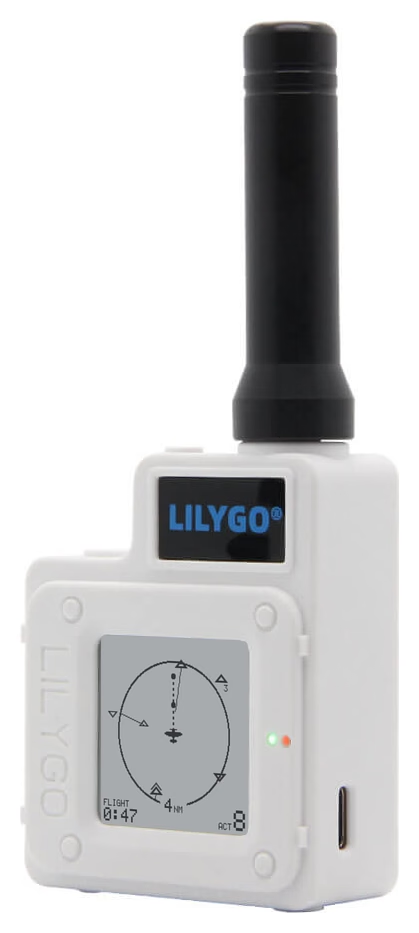
skyBlip Go broadcasts your position in ADS-L, receives everyone else’s and tells you where to look.
From light aircraft to skydivers, by way of microlights, gliders,
gyroplanes and paragliders.
Nothing to install on board, no
subscription.
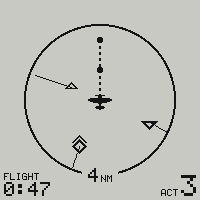
See the traffic
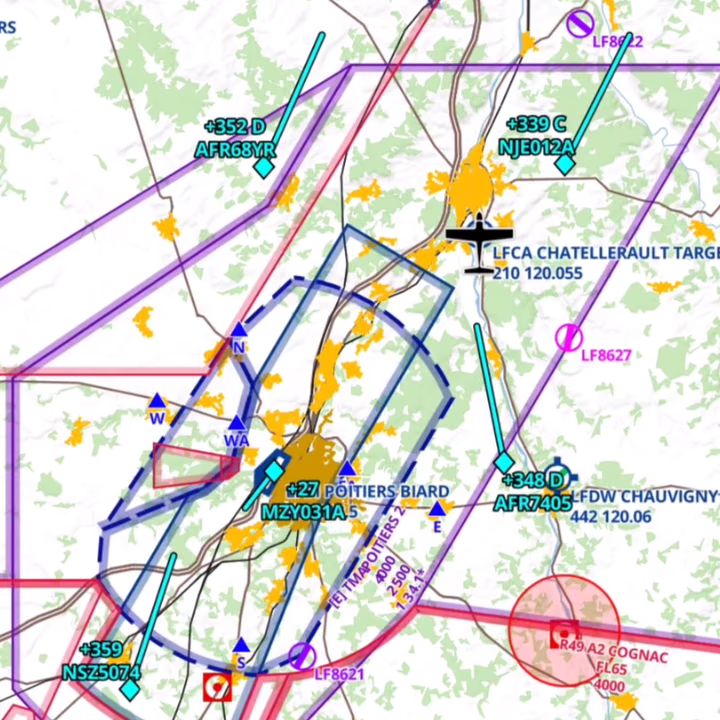
You are in the centre, track up. The traffic icon tells you whether it is above, level or below, and its track is projected a minute ahead.
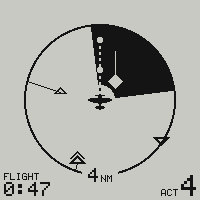
Know where to look
Within 3 km and 300 m, a quarter of the screen flashes on the side of the traffic.
Be seen
In flight, every second, it broadcasts your position in ADS-L. Every aircraft fitted with it sees you, with your callsign.
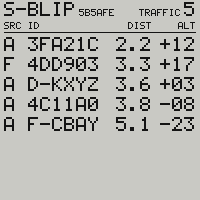
Keep your habits
Over Bluetooth, the traffic shows up in SDVFR Next, SkyDemon, ForeFlight and other apps.
Want to try it now, or get one?
Set down in the cockpit, it looks for its position and tells you how far it has got. Aircraft type and callsign are set on the device.
It broadcasts your position every second, plots the traffic track up, and warns you of traffic closing in. Its e-ink screen reads in full sunlight.
It lets you download its last flights and updates from the browser. Switched off, the screen shows the logo without drawing power.
A LilyGO T-Echo, mass-produced.
Transmitting, receiving, the alarm and updates, with nothing to pay.
The code is public. Full transparency, for the sake of safety.
A LilyGO T-Echo, in 868 MHz with the BME280 barometer.
Drop the skyBlip file on the USB drive that shows up.
Your aircraft type and your callsign, in the device’s menu.
From the browser, over Bluetooth, each one approved on the screen.
Want to try it now, or get one?
Aircraft fitted with ADS-L. skyBlip Go also receives FLARM, but transmits only ADS-L.
Not yet. They transmit ADS-B on 1090 MHz, which skyBlip Go does not receive. skyPost ground stations will relay them in ADS-L: what comes next.
No. Once you own the device, everything works: transmitting, receiving, the alarm, updates.
No. It is an aid to lookout. It replaces neither the lookout nor the transponder where one is required.
No. The radar, the alarm and the settings are on the device. The phone is for seeing the traffic in your navigation app.
Yes, skyBlip Go+, on a LilyGO T-Echo Plus: an alarm with buzzer and vibration, a bigger battery. Compare.
The skyBlip firmware leaves the T-Echo’s factory bootloader alone. The other software available for the device installs again as before.
The European electronic conspicuity standard, published by EASA. It covers everything from light aircraft to skydivers, by way of microlights, gliders, gyroplanes, helicopters, balloons and paragliders, and tomorrow drones.
A public specification that anyone can read and implement, and that skyBlip implements as open source.
A frame of a few milliseconds, once a second, on the licence-free 868 MHz band. A pocket device on a battery is enough.
Its channels follow those of FLARM and PilotAware. skyBlip Go also receives FLARM traffic.
The radar, the instruments, the controls, the battery, the phone, the radio and every screen.
What a pilot can see, backed by the published figures.
The firmware, its tests and its releases, open source on GitHub.
“Safety is not a premium option. Everything that touches it stays open source.”
Want to try it now, or get one?